Rust farming record run shows how one player chased 20,000,000 cloth in a single wipe
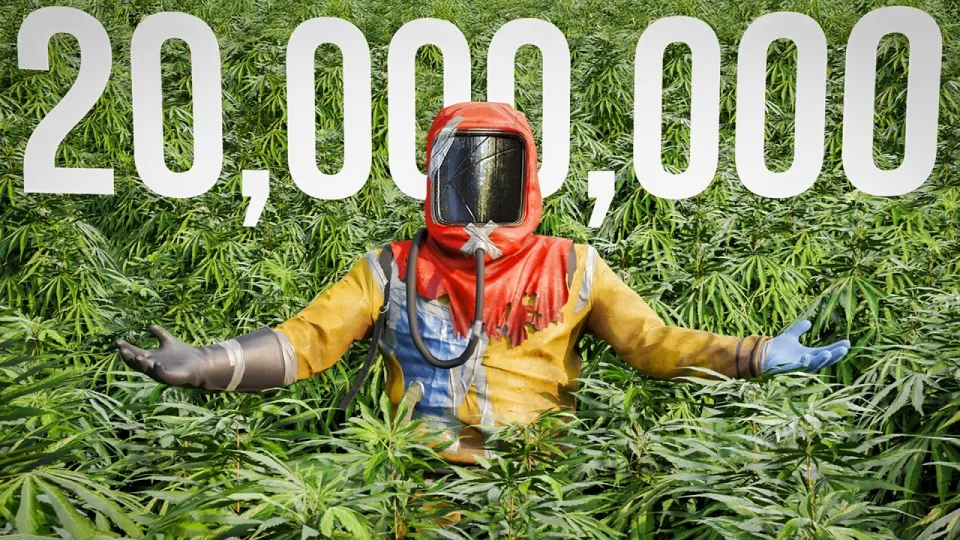
Video: I Became Rust's #1 Farmer...
You can order the same kind of articles for your own video to boost it on YouTube and Google. Just message the Telegram bot @sat_sit_bot. It writes articles around your video, embeds the video and publishes them on popular niche websites (no ads). Try it free: 50 articles on us.
· based on the channel JTeles
Rust farming is usually a means to an end, but one player turned it into a full server-wide objective: start with 126,000 cloth and finish a single wipe holding 20,000,000 cloth. That is the premise of JTeles' run, where the farming target is only half the story — the other half is a seven-day fight against a clan that wants the project dead. If you want to follow similar challenge runs and the tools used around them, the War Thunder free-to-play signup linked in the video is where the creator sends viewers first.
What the 20,000,000 cloth challenge actually involved
The rules were simple and brutal: begin with 126,000 cloth, end the wipe with 20,000,000, and do it inside 7 days. Cloth in Rust comes from hemp farming, and scaling from six figures to eight figures means moving from hand-picked hemp to industrial planters, automated harvesting and a base designed around throughput rather than defense.
That is why the run is described as an attempt to build the biggest cloth farm in Rust rather than simply a big one. The volume matters because cloth feeds everything downstream: bandages and medical supplies, clothing, and the trade value that lets a group convert farming output into gear, explosives and alliances. A farm of that size is not a side project — it is the economy of the server.
How viewers became the workforce
A single player cannot plant, harvest and defend 20 million cloth worth of hemp alone, so the run was opened up to viewers who joined the server to help. That turns a solo grind into a small organization with shifts, roles and a shared stash.
- Recruitment: viewers join the server and the clan to contribute labor.
- Specialization: some players farm hemp and run planters, others handle smelting, crafting and logistics.
- Defense: a standing group guards the compound and responds to raids while the farm keeps running.
- Continuity: members hold the base during offline hours so progress does not reset overnight.
The most-praised part of the run in the comments is exactly this — teammates defending the compound while the main player was offline or asleep. In Rust, an unguarded mega farm is a loot piñata, and the run only survived because the crew treated base defense as a job rather than an afterthought.
Why a giant cloth farm turns the whole server into an enemy
Building the biggest farm on a server makes you visible, and visibility in Rust is a threat assessment. A massive Russian clan found out what the project was attempting and moved to stop it, which pushed the run into open conflict.
- PvP: roaming fights over farm routes and resource nodes.
- Raids: attempts to break into the compound and wipe the planters.
- Base defense: holding walls, doors and turrets during attacks.
- Alliances: deals with other groups to share protection and information.
The scale cuts both ways. A compound packed with planters, storage and generators is a huge target, but it is also a fortress if built correctly. The run's compound reportedly grew so large and dense that looking at it caused server lag — a very Rust problem where success literally costs performance.
What it takes to farm 20 million cloth in one week
Hitting eight figures of cloth in seven days is a math problem before it is a combat problem. The output has to be predictable, because every hour lost to a raid or a rebuild is output you never get back.
Key requirements for a run like this:
- A planter layout large enough to keep harvesting continuous, with water and power infrastructure sized to match.
- A genetics setup that keeps hemp yield high instead of relying on random seeds.
- Storage and sorting so millions of cloth do not turn into a disorganized mess.
- A crafting pipeline that converts cloth into value before the wipe ends.
- A defense plan that assumes you will be scouted and attacked, not merely might be.
Players who have attempted similar projects report that the bottleneck is rarely the plants themselves — it is planting and harvesting time, which is why automation updates changed mega farms so dramatically. Before bulk planting and harvesting existed, a thousand-planter farm could eat six hours of pure clicking for a yield in the 17 million cloth range.
Common questions and doubts from viewers
Big farm runs always draw the same skeptical replies, and they are fair ones. A 20 million cloth target sounds like fiction until you see the planter count, and long challenge videos raise the question of how much was cut out.
The recurring doubts come down to three things: whether the number is real, whether the teammates deserve the credit, and whether the whole thing is staged for the camera. On the first point, the arithmetic is straightforward — cloth per planter per cycle multiplied by cycles per day multiplied by seven days. On the second, the honest answer is that the support crew is the run; defending a base at 4 a.m. is not a cameo. On the third, the chaos of raids, alliances and server lag is hard to fake at this scale, and the visible strain on the server is its own evidence.
The other thing viewers notice is the cost to the player. Farming for a week straight means sleep debt, odd hours and a lot of time staring at planters — one of the run's running jokes is about how bright daylight looks after days inside the base.
All links from the video
- War Thunder free-to-play (PC and consoles): https://wtplay.link/jteles
- War Thunder free-to-play (mobile): https://wtm.game/jteles
- JTeles Discord: https://discord.gg/jteles
- JTeles on Twitter/X: https://twitter.com/xJTeles
- JTeles on TikTok: https://www.tiktok.com/@xjteles
Final thoughts on Rust's cloth farming record attempt
What makes this run worth watching is that the farming target is only the scoreboard — the actual game is logistics, diplomacy and defense against a clan that outnumbers and outguns the farm crew. Going from 126,000 to 20,000,000 cloth in 7 days requires a planter build that borders on industrial infrastructure, a crew willing to hold the base around the clock, and enough political skill to keep a target off your walls for a week. The result is a case study in how Rust rewards organization over raw mechanical skill. JTeles documents the whole climb, and if you want to support the channel's sponsors, start with the War Thunder free-to-play registration.
Key takeaways
- The run started with 126,000 cloth and targeted 20,000,000 cloth before the wipe ended.
- The goal had to be reached within 7 days on a single server wipe.
- Viewers were invited onto the server to help build what was billed as the biggest cloth farm in Rust.
- A large Russian clan found out about the project and tried to stop it with PvP, raids and base attacks.
- The farm grew large enough that rendering the compound caused server lag.
Questions & answers
How much cloth do you need to start a 20 million cloth farm run in Rust?
The run began with 126,000 cloth and targeted 20,000,000 by the end of a single wipe, a window of 7 days. The starting stock is small relative to the goal, so the real requirement is planter capacity and continuous harvesting rather than the initial amount.
Is farming 20 million cloth in one wipe actually possible?
Yes, with industrial-scale planters and automation. Large planter farms can produce millions of cloth per harvest cycle, and players who built roughly a thousand planters before bulk planting existed reported yields around 17 million cloth per cycle. Reaching 20 million in a week depends on keeping that output running through raids.
Why do big farms in Rust always get raided?
A mega farm concentrates value in one place: planters, storage, generators and crafted goods. On a populated server that attracts clans who either want the loot or want to remove a competitor, so defense and offline coverage are as important as the farming itself.
Do the teammates in these challenge runs actually matter?
They are the reason the run survives. Someone has to defend the compound while the main player farms or sleeps, handle logistics and keep the planters running. Without that coverage, a single overnight raid can erase days of output.
Source: I Became Rust's #1 Farmer... · Markdown version